Start a Small Balcony Garden in India: Step-by-Step Guide
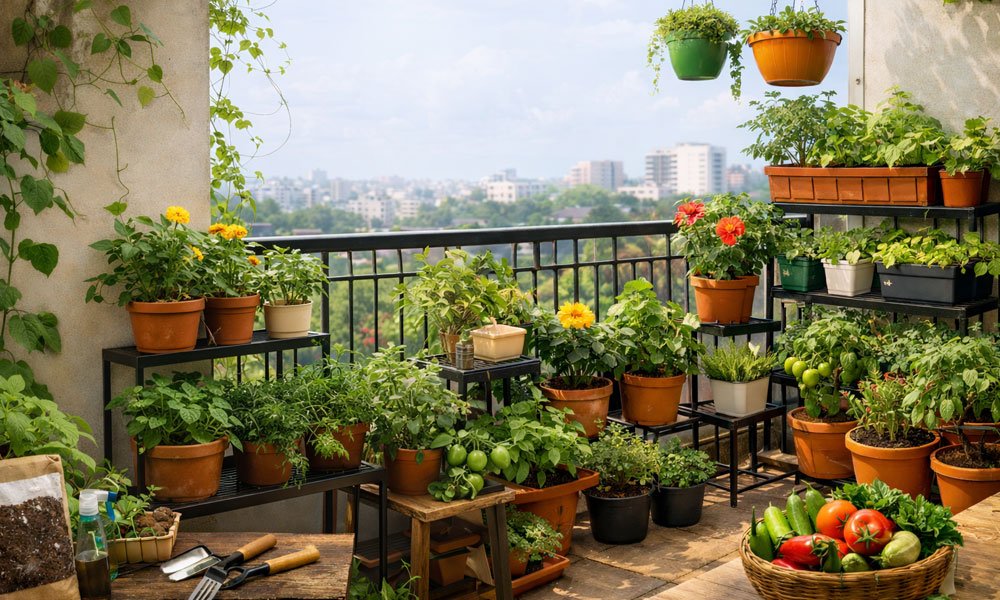
Starting a small balcony garden in India is one of the easiest ways to bring greenery into urban homes. With the right containers, sunlight planning, soil mix, and beginner-friendly plants, even a compact balcony can grow vegetables, herbs, and flowering plants successfully throughout the year.
This complete guide explains how to start a balcony garden step by step, including plant selection, soil preparation, watering tips, and essential gardening supplies required for beginners.
Step 1: Understand Sunlight Availability
Sunlight is the most important factor in balcony gardening success. Before buying plants, observe how many hours of sunlight your balcony receives daily.
- Full sunlight (6–8 hours): Ideal for tomatoes, chillies, brinjal, marigold, sunflower, and most vegetables.
- Partial sunlight (3–5 hours): Suitable for coriander, spinach, mint, basil, and flowering plants like petunia.
- Low sunlight: Best for decorative indoor plants such as snake plant, money plant, and peace lily.
Choosing plants according to sunlight conditions ensures better growth and reduces maintenance problems.
Step 2: Choose the Right Containers for Balcony Gardening
Selecting suitable containers helps maintain plant health and improves balcony space utilization.
- Plastic pots – lightweight and easy to move
- Clay pots – better air circulation for roots
- Grow bags – ideal for vegetables
- Hanging baskets – excellent for small balconies
- Railing planters – maximize vertical space
Always ensure proper drainage holes to prevent waterlogging.
Step 3: Select Easy Plants for a Balcony Garden in India
Beginners should start with easy-to-grow plants that adapt well to Indian climate conditions.
Herbs
- Mint
- Coriander
- Basil
- Tulsi
Vegetables
- Green chilli
- Tomato
- Spinach
- Fenugreek (Methi)
Flowering Plants
- Marigold
- Zinnia
- Petunia
- Vinca
Decorative Plants
- Money plant
- Snake plant
- Areca palm
- Jade plant
Step 4: Prepare the Ideal Potting Soil Mix
Using a balanced potting mix is essential for container gardening. A good soil mixture improves drainage, root aeration, and nutrient availability.
- 40% garden soil
- 30% compost or vermicompost
- 20% cocopeat
- 10% sand (optional for drainage)
Adding organic compost every few weeks keeps plants healthy and productive.
Step 5: Essential Gardening Supplies for Beginners
Keeping the right gardening essentials ready makes starting a balcony garden easier and ensures better plant growth.
- High-quality vegetable and herb seeds
- Healthy indoor and outdoor starter plants
- Ready-to-use potting soil mix
- Durable grow bags or containers
- Organic compost and plant nutrition
Using good-quality gardening supplies improves germination rates and long-term plant health.
Step 6: Proper Planting Technique
- Fill containers with prepared soil mix.
- Leave 2–3 cm space at the top.
- Place seeds or saplings gently in the soil.
- Water lightly after planting.
Avoid compressing the soil too tightly, as roots require proper airflow.
Step 7: Watering Balcony Plants Correctly
Correct watering practices prevent root damage and ensure healthy growth.
- Water early morning or evening
- Check topsoil before watering
- Water only when soil feels slightly dry
- Ensure proper drainage
Step 8: Provide Regular Nutrition
Container plants depend entirely on external nutrition. Feeding them regularly improves growth and flowering.
- Vermicompost every 15–20 days
- Liquid organic fertilizer
- Compost tea
- Diluted organic mustard cake fertilizer
Step 9: Arrange Plants to Maximize Balcony Space
- Place tall plants at the back
- Keep sunlight-loving plants at the front
- Use vertical plant stands
- Install hanging planters to save floor space
Efficient placement allows even small balconies to support 20–30 plants comfortably.
Step 10: Natural Pest Control for Balcony Gardens
- Neem oil spray every 10–15 days
- Soap water spray for minor pests
- Remove infected leaves immediately
- Maintain proper airflow between plants
Benefits of Starting a Small Balcony Garden
- Fresh herbs and vegetables at home
- Improved air quality
- Reduced balcony heat
- Stress relief through gardening
- Productive use of limited urban space
Common Beginner Mistakes to Avoid
- Starting with too many plants
- Using poor-quality soil
- Overwatering plants
- Ignoring sunlight requirements
- Skipping plant nutrition
Conclusion
Learning how to start a small balcony garden in India is simple when you follow the right steps. With proper sunlight planning, suitable plants, balanced soil mix, and regular maintenance, even a small balcony can become a productive green space. Start with a few easy plants, gain experience gradually, and expand your balcony garden over time to enjoy fresh greenery at home.
FAQs
Mint, coriander, tomato, chilli, marigold, and money plant are among the easiest plants to grow in Indian balcony conditions.
Watering should be done when the topsoil feels dry. Frequency depends on weather, sunlight exposure, and plant type.
Yes, vegetables such as tomatoes, chillies, spinach, and fenugreek grow very well in containers with proper sunlight and nutrition.
A mixture of garden soil, compost, and cocopeat provides proper drainage, aeration, and nutrients required for container plants.
With vertical stands and hanging planters, even a small balcony can comfortably accommodate 20–30 plants.